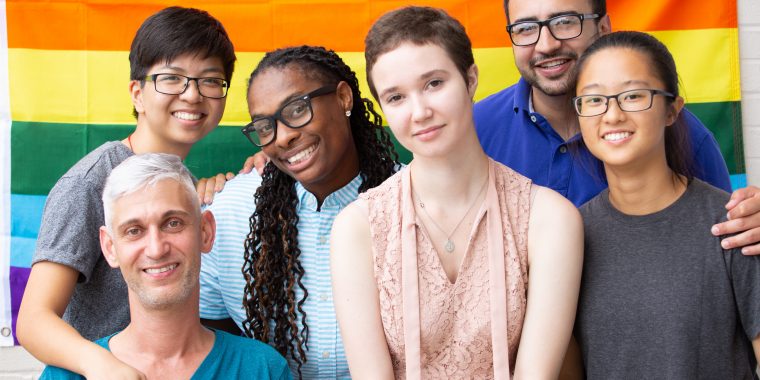
The Vanderbilt Program for LGBTQ Health is dedicated to addressing the barriers of care faced by sexual and gender minority patients. For LGBTQ individuals with disabilities, these barriers are even more prominent.
LGBTQ identity and disability are likely to intersect. The 2015 US Transgender Survey found that 39% of transgender adults have one or more disabilities, compared to 15% of the general population. The Movement Advancement Project (MAP) reported that 36% of lesbian and bisexual cisgender women, 40% of bisexual men, and 27% of gay men have a disability. LGBTQ people are also more likely to struggle with their mental health, and report higher rates of anxiety, depression, and PTSD.
According to a 2018 report by the Disability Rights Education and Defense Fund, disability amongst LGBTQ people was seen historically as a health outcome, rather than another facet of their identity. It is important to recognize, however, that LGBTQ identity does not cause or worsen a person’s disability. Rather, a person who is disabled and LGBTQ faces compounding discrimination within and outside of the medical system as well as other barriers to care.
MAP also reports that LGBTQ people with disabilities are more likely to experience job discrimination and economic insecurity, which makes it harder to afford important medical care. They may be rejected from their families of origin, removing them from their support systems or caretakers. Even some LGBTQ spaces, where they might find community and social services, may be inaccessible to some LGBTQ people with disabilities.
Though LGBTQ people with disabilities face compounding discrimination because of their intersecting identities, some institutions may erase or invalidate facets of their identity, which can be just as harmful. There is very little research on the intersection between disability and LGBTQ identity. Often, they are looked at as separate issues. LGBTQ people with disabilities may have their LGBTQ identity overlooked or erased entirely, or vice versa.
“I think we have real opportunities at Vanderbilt to contribute more to research, as well as clinical care for LGBTQ people with disabilities,” says Del Ray Zimmerman, Director of the Office for Diversity Affairs and LGBTQ Health. “Over the next year, we’re advancing an initiative to collect sexual orientation and gender identity data in our electronic health records. This will give us an important tool to look at health outcomes for our LGBTQ patients who also have disabilities.”
But greater visibility is only one aspect of improving health outcomes for LGBTQ patients with disabilities. In Tennessee, LGBTQ people can still be refused medical and mental health treatment. Many LGBTQ individuals have reported that they have delayed care because they have previously experienced discrimination or rejection in the doctor’s office. And those struggling with mental illness may also struggle with finding a therapist who can understand and affirm their LGBTQ identity. A therapist who is treating an LGBTQ person’s anxiety but is not culturally competent or sensitive to the unique needs of the LGBTQ community cannot accurately respond to that patient’s concerns.
Finding LGBTQ affirming care, especially in the South, where options seem limited, can feel overwhelming for many. The Vanderbilt Program for LGBTQ Health believes that everyone deserves to receive affirming, culturally competent care. One of the main services the program provides is patient navigation.
Patients can call or email the program to be connected to LGBTQ-affirming medical and mental health providers both within and outside of the Vanderbilt system. The program continually expands its list of vetted providers to help LGBTQ people across the Southeast. Program staff also provides trainings on LGBTQ health concerns to clinical departments within VUMC, as well as other health centers and health profession schools in Nashville and the surrounding area.
The Vanderbilt Program for LGBTQ Health models other healthcare supports as well. An example is Trans Buddy, an initiative that utilizes trained volunteers to provide emotional support to transgender people seeking care at Vanderbilt University Medical Center.
Trans Buddy volunteers can also provide real-time education to staff members who might not be aware of trans identities, as well as ensure that the patient has whatever they need for a successful visit. For a transgender person struggling with anxiety about going to a provider’s office, a Trans Buddy can make it easier for them to stay connected to care.
“We are working to enhance our services and increase accessibility by intentionally embarking on partnerships with the Vanderbilt Kennedy Center, the Tennessee Council on Developmental Disabilities, and the Tennessee chapter of the Alzheimer’s Association,” Zimmerman said. “We are committed to serving the intersectional needs of our LGBTQ patients with disabilities.”
To contact the Vanderbilt Program for LGBTQ Health, patients may call 615-936-3897 or email lgbtq.health@vumc.org. To access the Trans Buddy hotline (available seven days a week), call 615-875-BUDD (2833).