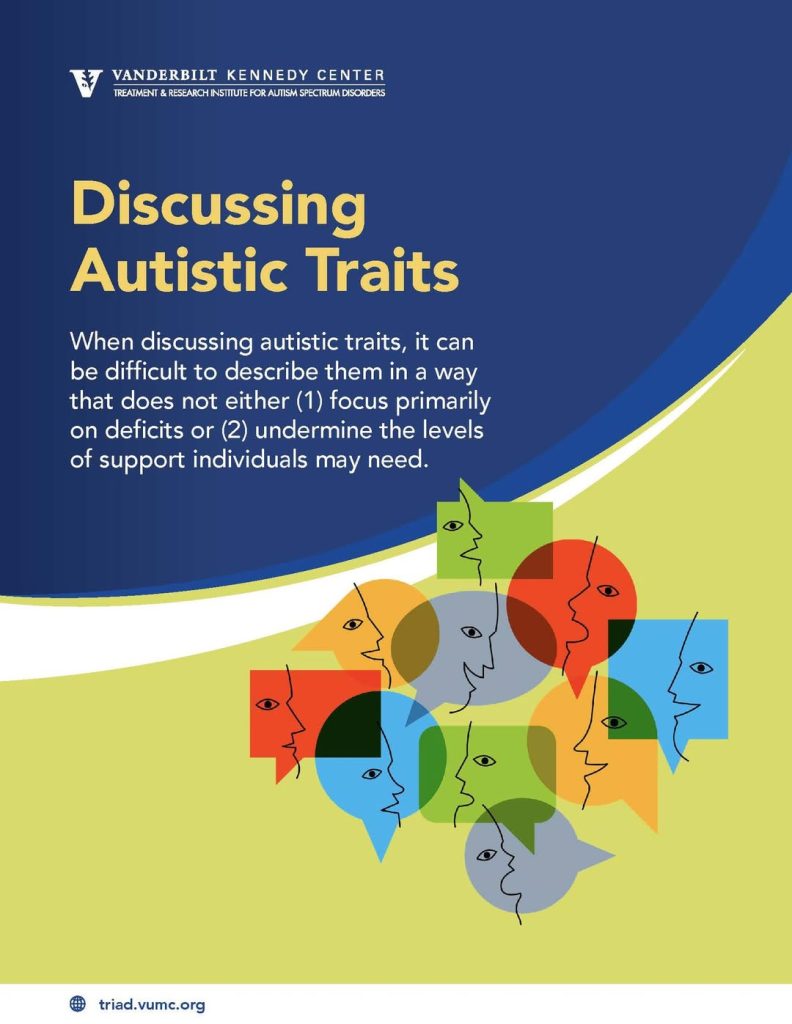
Historically, autism has often been described using language that emphasizes what someone cannot do. This approach can unintentionally create misunderstandings and reinforce assumptions that do not reflect the full picture of an individual’s experiences, abilities, or preferences. The TRIAD tip sheet encourages readers to consider how describing traits through a deficit-only lens can shape perceptions and limit opportunities. Instead, the resource provides examples of how to describe autistic traits in ways that are more balanced, accurate, and reflective of individual differences.
For example, traits related to communication, social interaction, sensory experiences, or routines are often framed as challenges without recognizing how these differences can also reflect preferences, strengths, or ways of navigating the world. The tip sheet encourages readers to think about context and environment, and how expectations built around neurotypical norms can influence how behaviors are interpreted. By shifting language, we can move toward conversations that better reflect lived experiences while still identifying areas where support may be helpful.
Another key point emphasized in the TRIAD resource is that support needs vary widely across individuals and across situations. Two people may share similar traits but require different types or levels of support. In addition, support needs can change depending on the environment, stress levels, transitions, or expectations. Recognizing this variation helps move conversations away from one-size-fits-all assumptions and toward more individualized understanding. The tip sheet encourages thoughtful consideration of both strengths and areas where support can enhance participation, communication, and comfort.
This guidance is helpful for a wide range of audiences, including families, educators, service providers, employers, and community members. For families, the resource offers language that can help describe their child’s experiences in ways that highlight abilities while still advocating for needed supports. For educators and professionals, it provides examples of how to document and discuss traits without reinforcing limiting assumptions. For community members, it offers a starting point for more respectful and informed conversations about autism.
Using more thoughtful language does not mean ignoring challenges or minimizing support needs. Instead, it encourages describing traits in ways that reflect the whole person. This balanced approach supports clearer communication, better understanding, and more effective planning for services and supports. It also helps create environments where autistic individuals are seen for their strengths, preferences, and individuality.
Resources like this tip sheet also reinforce the importance of listening to autistic voices. Developed with guidance from the Autistic Advisory Council, the content reflects lived experience alongside professional knowledge. This collaboration helps ensure the guidance is grounded in real-world perspectives and meaningful to those it is intended to support.
As conversations about autism continue to evolve, having practical tools for communication becomes increasingly important. The Discussing Autistic Traits tip sheet offers a thoughtful approach that supports clearer understanding while honoring the diverse experiences of autistic individuals. Whether you are supporting someone directly or simply looking to strengthen your language, this resource provides helpful guidance for describing autistic traits with clarity, respect, and accuracy.
View the tip sheet by clicking on the image below: