A Career Plan Built Around You
Finding the right job is not always about searching job boards and submitting applications. For someone who is blind or has low vision, it can also mean figuring out what kind of career fits their interests, what supports may be needed, and what steps can help them move toward their employment goals.
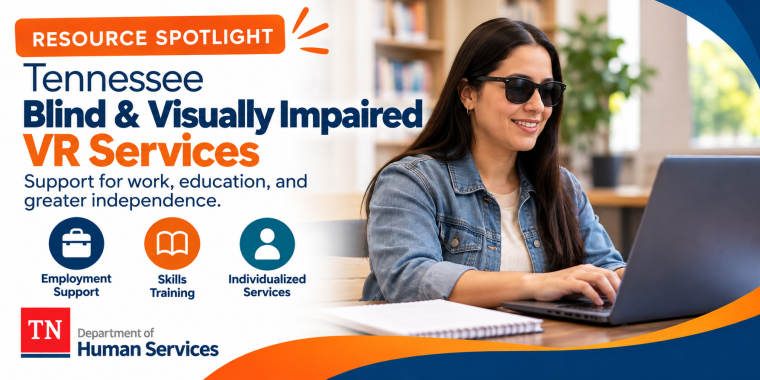
Tennessee Blind & Visually Impaired Vocational Rehabilitation Services provides specialized employment support for eligible Tennesseans who are blind or visually impaired. But an important part of the program is that the person seeking services is not simply handed a plan. They are part of creating it.
Vocational Rehabilitation Counselors who work with individuals who are blind or visually impaired have specialized training and are located in regional offices across Tennessee. Their role includes helping individuals look at their strengths, interests, abilities, preferences, and career goals and determine what may be needed to move forward.
Starting the Process
A person can begin by submitting a referral for Vocational Rehabilitation services through the Tennessee Department of Human Services. From there, the VR team works with the individual to gather information and determine eligibility.
Eligibility is based in part on whether a disability creates a substantial barrier to employment and whether VR services are needed to help the person prepare for, obtain, maintain, regain, or advance in employment. In most cases, an eligibility determination must be made within 60 days after an application for VR services is signed.
People who receive SSI or SSDI benefits based on their own disability or blindness are presumed eligible for VR if they intend to work, although they still participate in the application and planning process.
Turning a Goal Into a Plan
For those who are eligible and choose to participate, the next step is developing an Individualized Plan for Employment, or IPE.
This is where the conversation becomes more personal.
Someone may already know exactly what career they want. Someone else may be returning to the workforce after vision loss and need to explore what comes next. Another person may already be employed but want to advance, earn a credential, or move into a different field.
The IPE identifies the individual’s employment goal and lays out the training, supports, services, and timeline that can help move that goal forward. The plan is developed with the individual—not simply for them.
Once the plan is in place, the individual continues working with the VR team as they prepare for employment, build job-ready skills, work toward their career goal, and begin the employment process.
And support does not necessarily end on the first day of a new job. Tennessee VR’s process includes following up after employment to determine whether the person is satisfied with the outcome and whether additional support may be needed.
More Than Finding a Job
That distinction matters.
Employment success is not simply getting someone placed in an available position. It is helping people pursue employment that reflects their abilities, interests, choices, and goals.
For Tennesseans who are blind or have low vision, specialized VR services can provide a place to begin that conversation—and a team to help turn a career goal into a plan.
Learn more or get started:
https://www.tn.gov/humanservices/ds/blind-visually-impaired-services/bvis-vrservices.html