Community is stronger when we support one another. This section spotlights peer support groups, caregiver networks, community-based programs, and organizations that foster belonging, encouragement, and shared experiences. By highlighting opportunities to connect, we aim to strengthen relationships and ensure no one has to navigate their journey alone
Build Your Readiness Circle: Support Without Giving Up Control
Written by Linda Brown, Information & Referral Coordinator
When people hear the words support network, they may picture a list of emergency contacts.
But a phone number alone does not tell someone how you want to be supported.
That is where a readiness circle comes in.
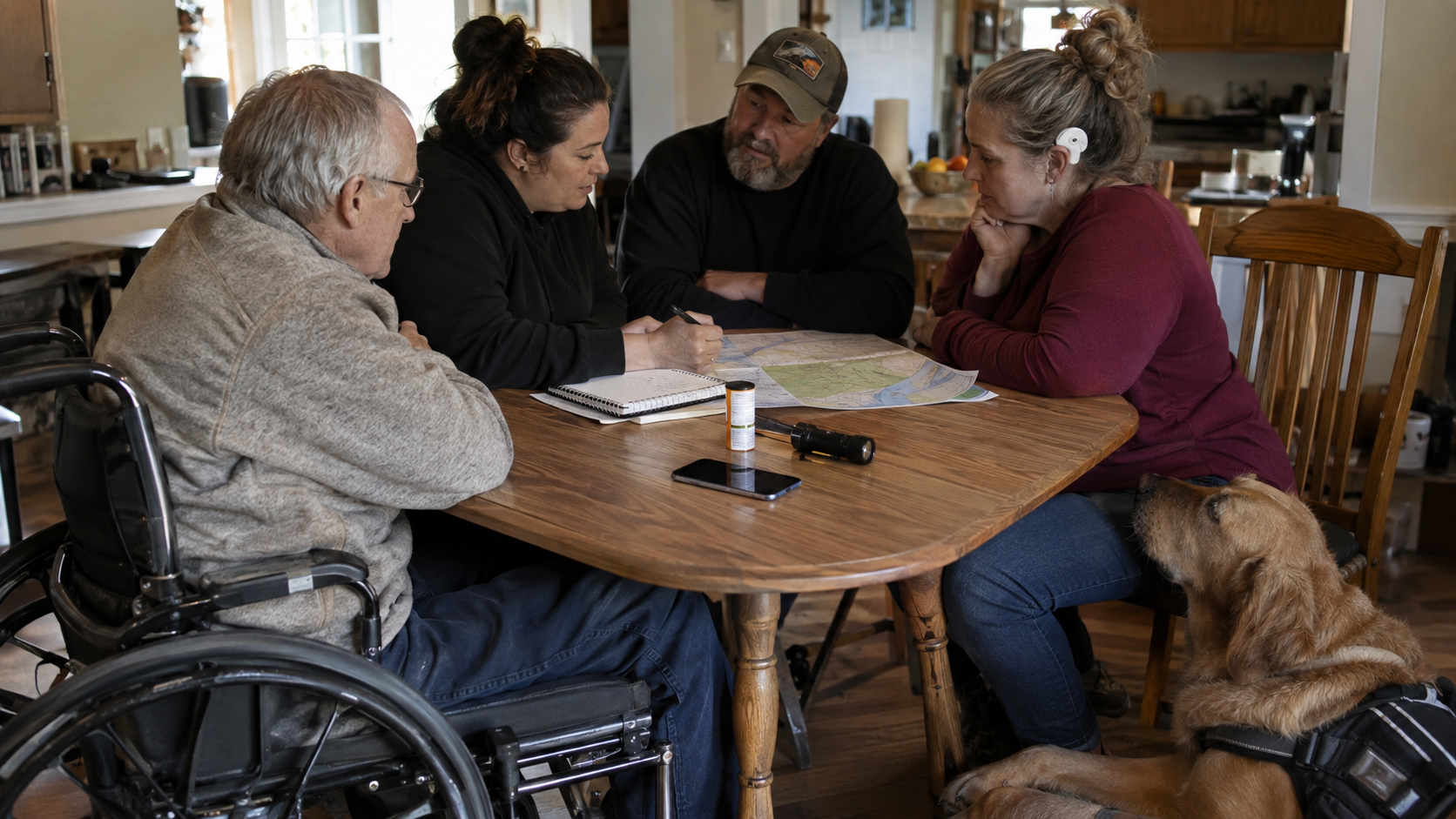
A readiness circle is a small group of people and organizations who already understand the parts of your life that could become harder to manage when something unexpected happens. They may know how you communicate, what transportation you use, whether equipment requires power, who assists with personal care, how your service animal should be supported, or where important instructions are kept.
Most importantly, a readiness circle is not about handing control of your life to someone else.
It is about deciding ahead of time who can help, what they can do, and how you want that help offered.
Start With People Who Know You
Your readiness circle does not need to be large.
Begin with one person you trust who can serve as your primary check-in person. This should be someone who knows your plan and understands what matters to you.
Their role might be as simple as calling or texting after severe weather, checking whether your power is on, confirming that transportation is available, or helping you contact another person if something has changed.
But one person should not have to carry the entire plan.
You may also want an out-of-area contact—someone who lives outside your immediate community and may be easier to reach if local phone service, internet access, or other communication systems are disrupted. Family members and friends can agree in advance that this person will serve as a central contact when local communication becomes difficult.
The goal is not to create a complicated chain of command.
It is to make sure everyone knows who is doing what.
Give People Roles, Not Assumptions
One of the most useful conversations you can have with your readiness circle is about roles.
Who checks in?
Who knows how your equipment works?
Who could help with transportation?
Who knows where medication information, emergency contacts, equipment instructions, or other critical supplies are stored?
Who understands what your service animal needs?
If you use paratransit or another transportation service, have you asked what happens when normal service is disrupted? If family or friends are part of your transportation plan, do they know what equipment or mobility supports may need to travel with you?
Having these conversations before something happens can prevent people from making assumptions later.
For example, a trusted person may know that you have a backup battery but do they know where it is?
Someone may know that you take medications—but do they know where your current medication list is stored?
A family member may be willing to provide transportation but will your mobility device fit in the vehicle?
Those details matter.
Build a Circle That Reaches Beyond Your Household
A readiness circle can include more than family and friends.
Community organizations can become valuable parts of the network you build around yourself.
Depending on where you live in Tennessee, that may include a Center for Independent Living, Area Agency on Aging and Disability, disability organization, faith community, caregiver network, neighborhood group, or another local organization you already trust.
These connections can be especially important when the person you normally rely on is facing the same disruption you are.
Your local emergency management agency should also be part of what you know before an emergency happens.
Ask how local alerts are distributed.
Find out where shelters are located and what accessibility supports may be available.
Ask how transportation needs are handled locally and whether there are programs or registration processes you should know about in advance.
Emergency procedures can vary from one Tennessee community to another. Knowing how things work where you live can make your plan more useful.
And if you are unsure where to begin identifying local disability-related resources, Tennessee Disability Pathfinder can help connect you with organizations and services across the state.
Support Should Still Begin With the Person
A readiness circle only works when it respects the person at the center of it.
Helping should not automatically mean taking over.
Someone may need information but not decision-making.
They may need a ride but not someone determining where they should go.
They may need help charging equipment but want to handle everything else independently.
They may simply want someone nearby while they decide what comes next.
That is why one of the most useful questions a person in your readiness circle can learn to ask is:
“What support would be useful right now?”
It is a simple question, but it changes the tone of the interaction.
It does not assume helplessness.
It does not presume to know what someone needs.
And it leaves room for the answer to be, “Nothing right now.”
That matters too.
Make the Circle Work Before You Need It
A readiness circle should not exist only on paper.
Talk through it.
Make sure people understand their roles.
Share only the information you are comfortable sharing.
Let people know where important instructions are stored.
Update contacts when something changes.
And occasionally ask whether the plan still makes sense.
The strongest readiness circle is not necessarily the biggest one.
It is the one where people understand the person, understand their role, and know how to offer support without taking away choice or control.
Because sometimes readiness is not about having more things.
Sometimes it is knowing that the right people already understand how to show up.